
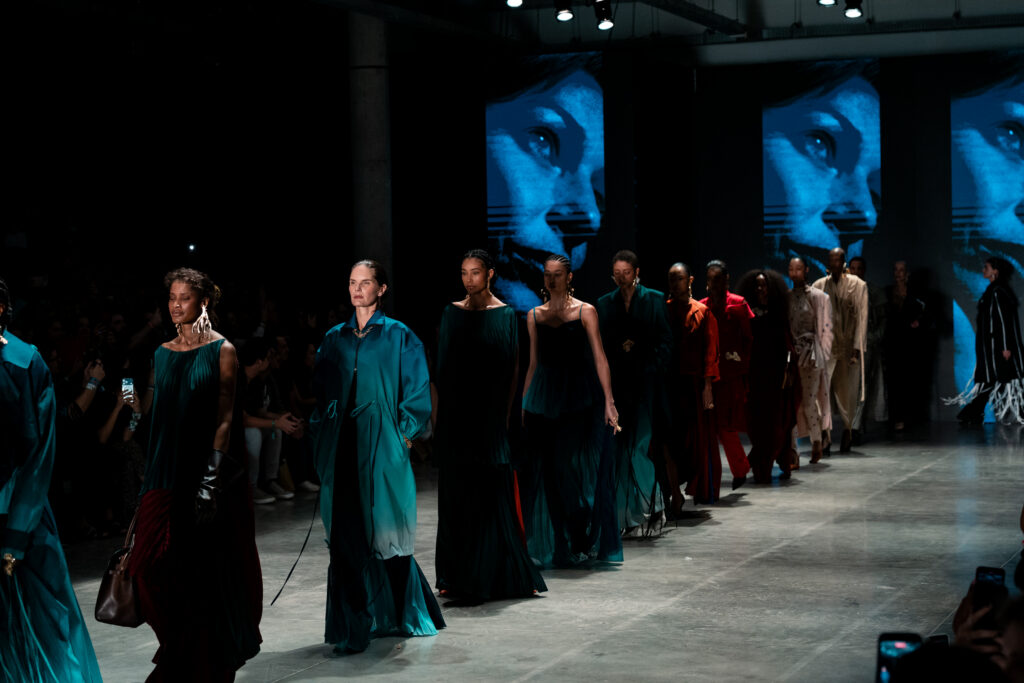
On October 18, São Paulo Fashion Week (SPFW) concluded its 61st edition, bringing the celebrations of three decades of history to a close. Under the theme Imaginários (Imaginaries), the fashion week brought together runway shows, exhibitions, and gatherings that offered different perspectives on Brazilian creativity, its cultural references, and the possibilities of imagining new futures for fashion.
Held from October 13 to 18, the edition featured 24 runway shows across the Brazilian Cultures Pavilion in Ibirapuera Park and other venues throughout São Paulo. Beyond presenting collections, the anniversary program invited audiences to reflect on the journey of Brazilian fashion and on the people, ideas, and processes that have helped shape its identity.
Moda Entre Olhares: When Clothing Becomes Memory
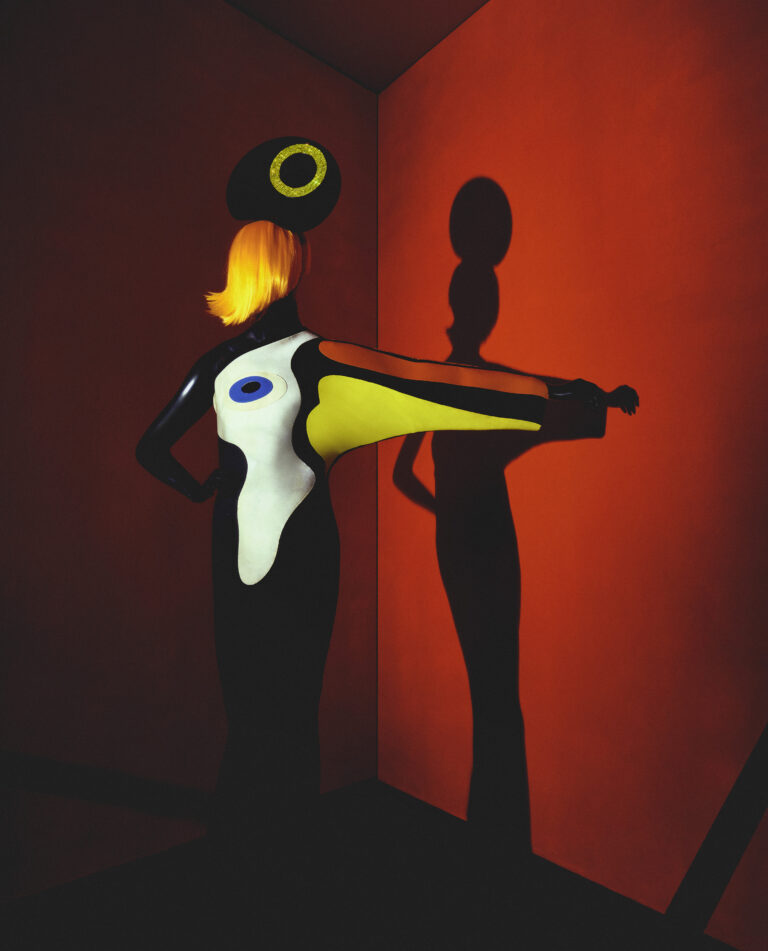
One of the highlights of the anniversary celebrations was the exhibition Moda Entre Olhares (Fashion Through Different Perspectives), presented at Instituto ViaFoto in Pinheiros, São Paulo. Curated by Paulo Borges, the exhibition draws on the creative universe of designer and stylist Davi Ramos to bring fashion, photography, and art into dialogue. It features creations by 22 brands and designers whose work forms part of SPFW’s history, alongside photographs by 18 photographers from different generations.
On view from October 10 to December 10, 2026, the exhibition brings fashion, photography, and art together, encouraging reflection on image, memory, and transformation. The garments are no longer viewed solely as fashion objects; they take on a different role as records of an era, a creative vision, and a cultural context.
By revisiting creations from different periods, the exhibition also reveals how the meaning of a garment can change over time. A silhouette, texture, or detail that defined a particular moment takes on new meanings when viewed from the present.
Looking back does not mean remaining in the past. On the contrary, it allows us to recognize references, understand transformations, and see how memory continuously informs the creative process. As with textile collections and archives, preserving these garments and images also means preserving part of the cultural history that made them possible.
Handmade Craftsmanship Takes the Runway
While the exhibition invites us to reflect on fashion’s memory, several runway shows in this edition drew attention to what happens before a garment reaches the runway: the time devoted to its making, mastery of a technique, and the knowledge of those who transform threads and materials into surfaces, shapes, and volumes.
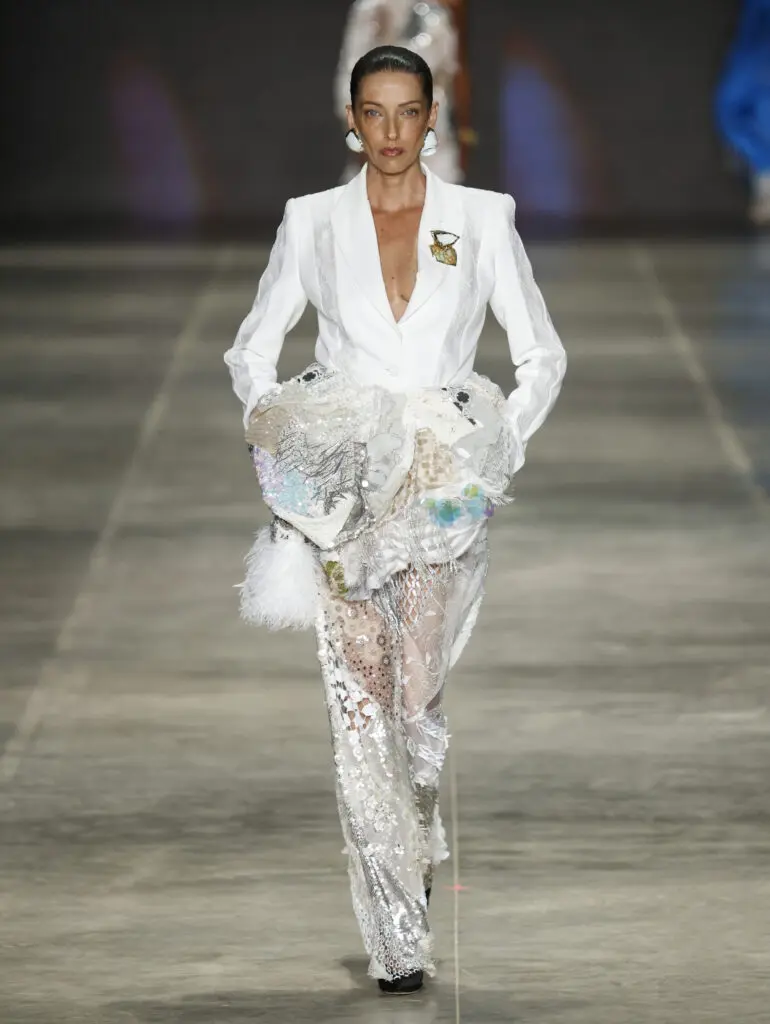
Handcrafted work had a strong presence at this edition of SPFW. Crochet, lace, embroidery, woven structures, and appliqué demonstrated that traditional techniques can continue to evolve, finding new possibilities within contemporary fashion.
The brand Catarina Mina presented Bonito pra Chover (Beautiful Enough for Rain), a collection inspired by the relationship between rainfall and Brazil’s semi-arid backlands, known as the sertão. Water, an element that transforms the landscape, was translated into embroidery reminiscent of raindrops, sinuous crochet patterns, and a range of artisanal techniques, including bobbin lace, Richelieu embroidery, and renda de tramoia, a traditional lace-making technique. The collection also incorporated strawwork and references to vegetation that springs back to life after the drought.
Beyond exploring visual effects, the collection deepens the dialogue with artisan communities in the Brazilian states of Ceará, Rio Grande do Norte, and Piauí. The presence of these techniques highlights the importance of local knowledge and the people who keep it alive, demonstrating how craftsmanship can become part of contemporary design without losing its connection to place and culture.
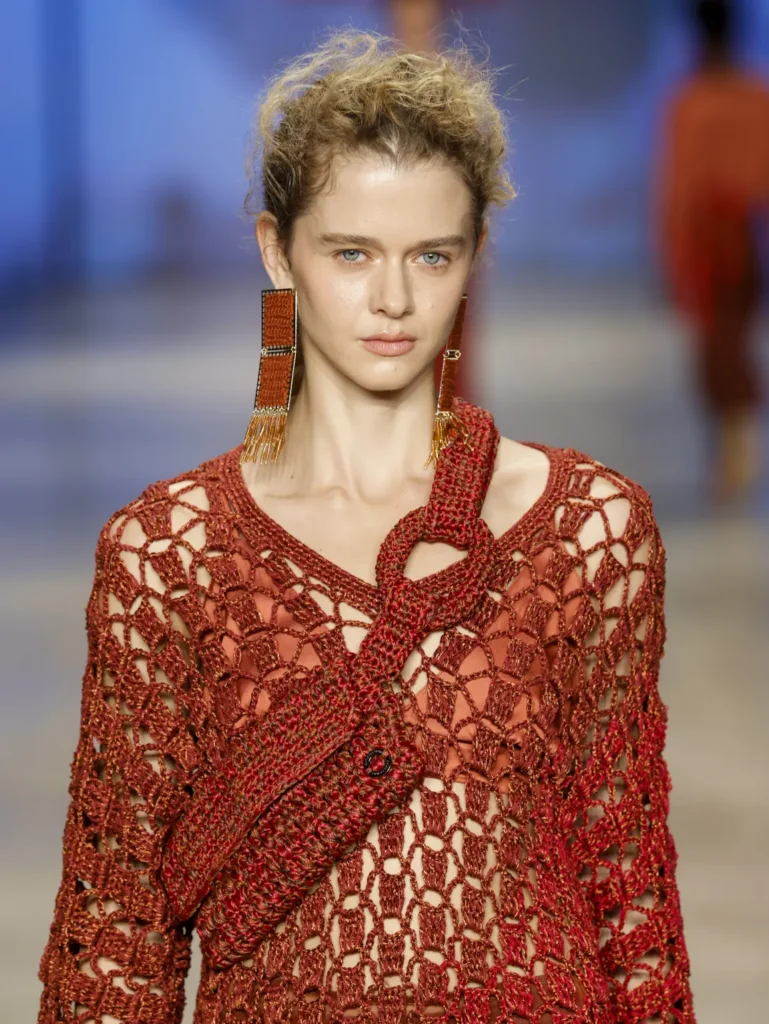
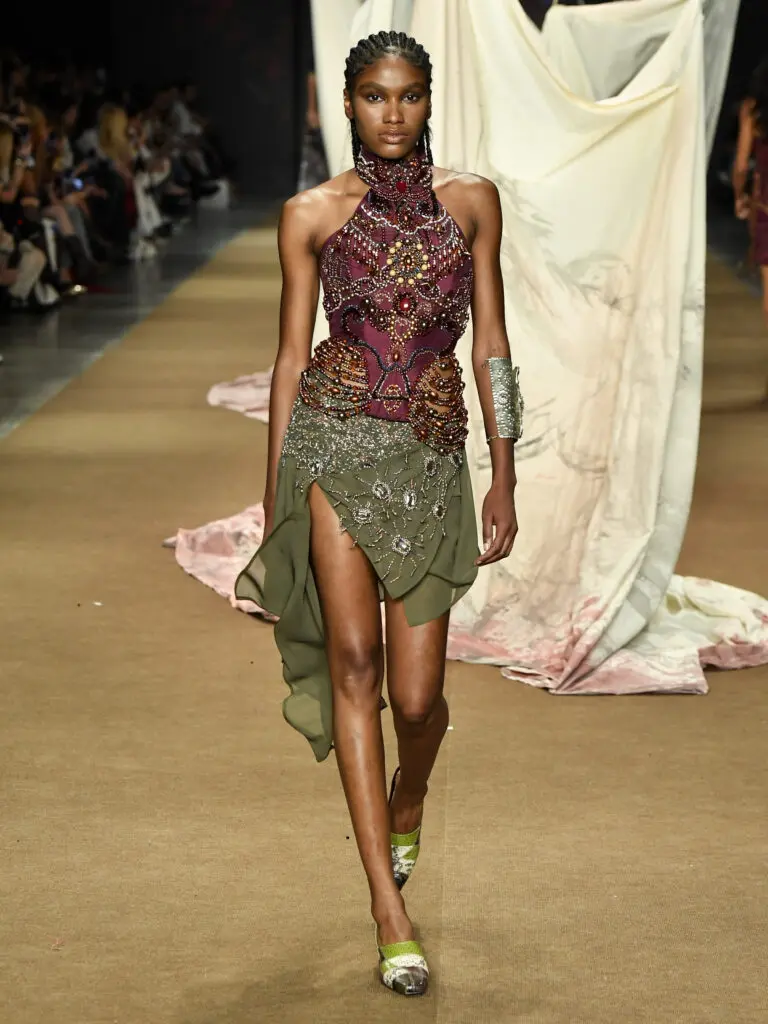
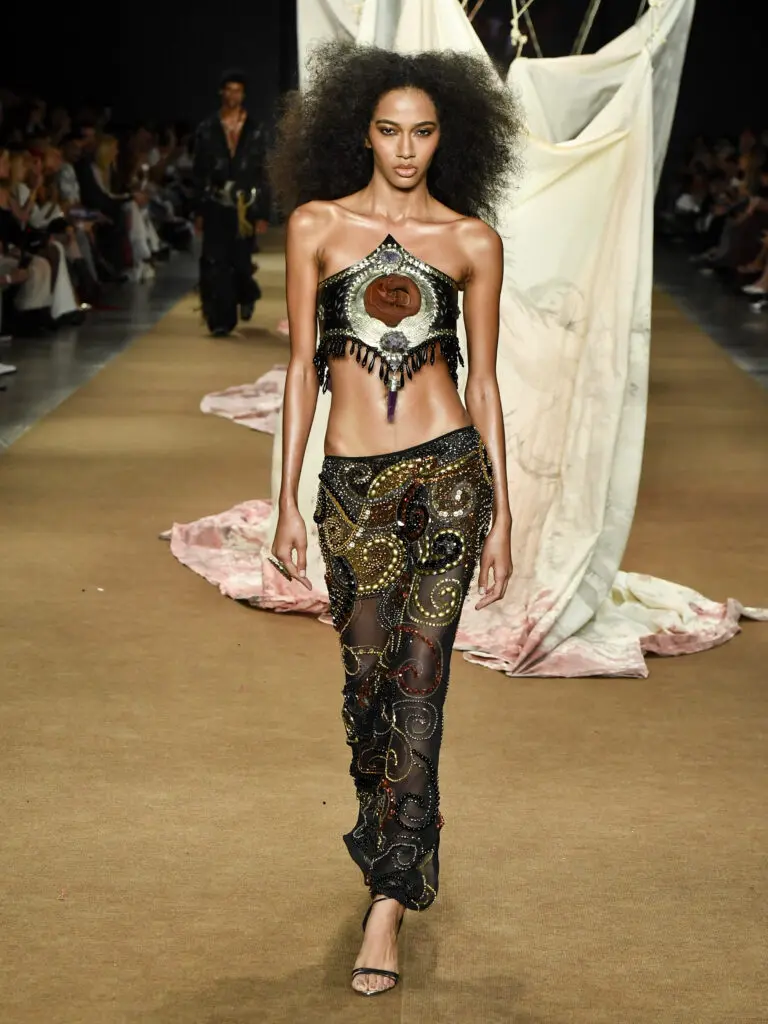
Hisha, the brand founded by designer Giovanna Resende, made its SPFW debut with Alforje, a collection inspired by the landscapes along the Estrada Real, a historic route in the Brazilian state of Minas Gerais. The region’s red earth, geological formations, and precious stones were translated into colors, textures, and hand embroidery. Beads, crystals, metals, and gemstones enriched the garments, while elements of traditional saddlery, such as buckles, straps, and fastenings, inspired cutouts and volumes. The result demonstrates how embroidery can move beyond its ornamental function to become a language capable of expressing identity, a sense of place, and artisanal knowledge.
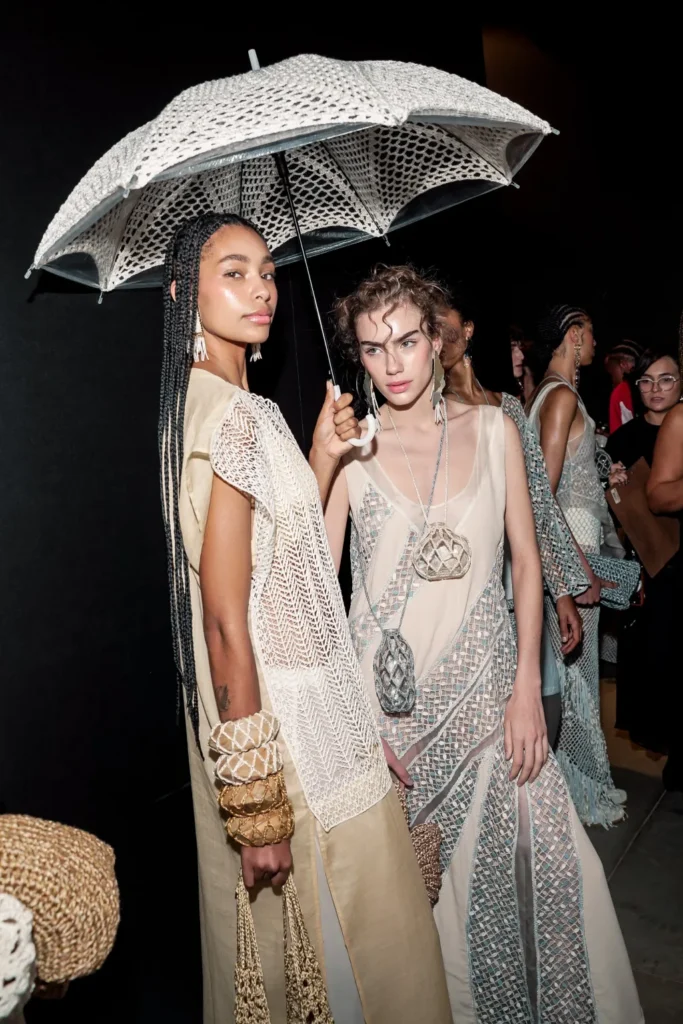
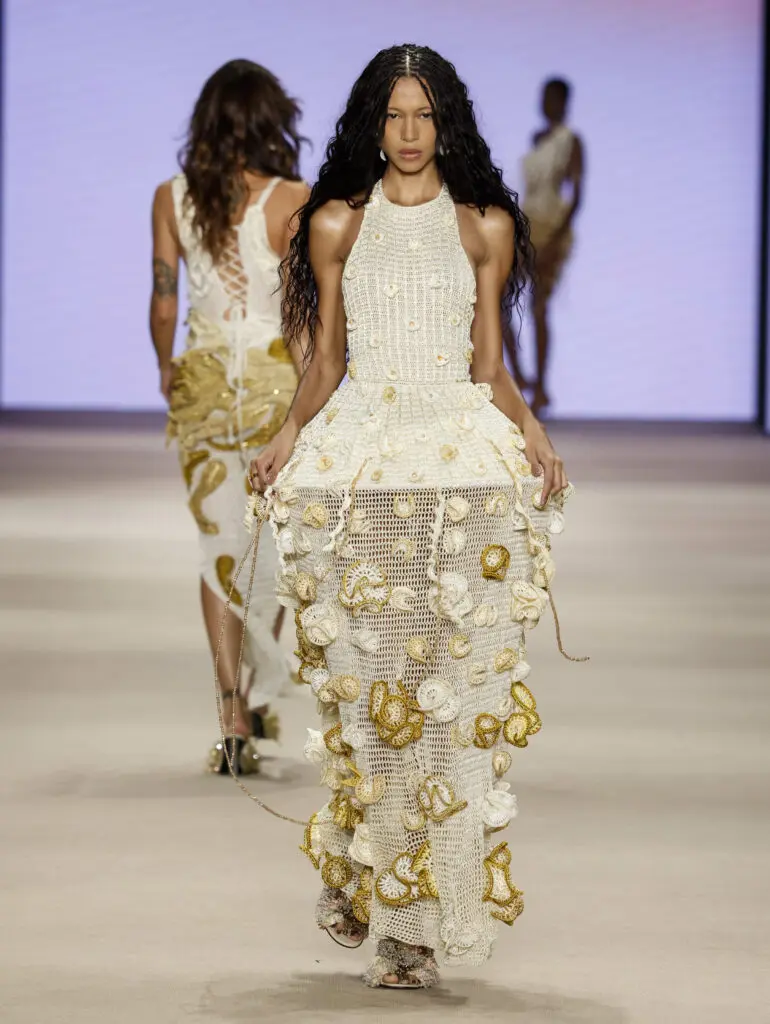
Ammi also made its debut at fashion week with Forma Viva (Living Form), exploring the relationship between nature, the body, and movement. Crochet, lace, embroidery, gemstones, and three-dimensional elements created a variety of textures and volumes. According to the brand, its garments are handcrafted by a network of approximately 300 women artisans, highlighting the collective effort that can exist behind a fashion collection. Forma Viva, explorando a relação entre natureza, corpo e movimento. Crochês, rendas, bordados, pedrarias e elementos tridimensionais construíram texturas e volumes variados. Segundo a marca, suas peças são produzidas manualmente por uma rede de aproximadamente 300 artesãs, evidenciando a dimensão coletiva que pode existir por trás de uma coleção.
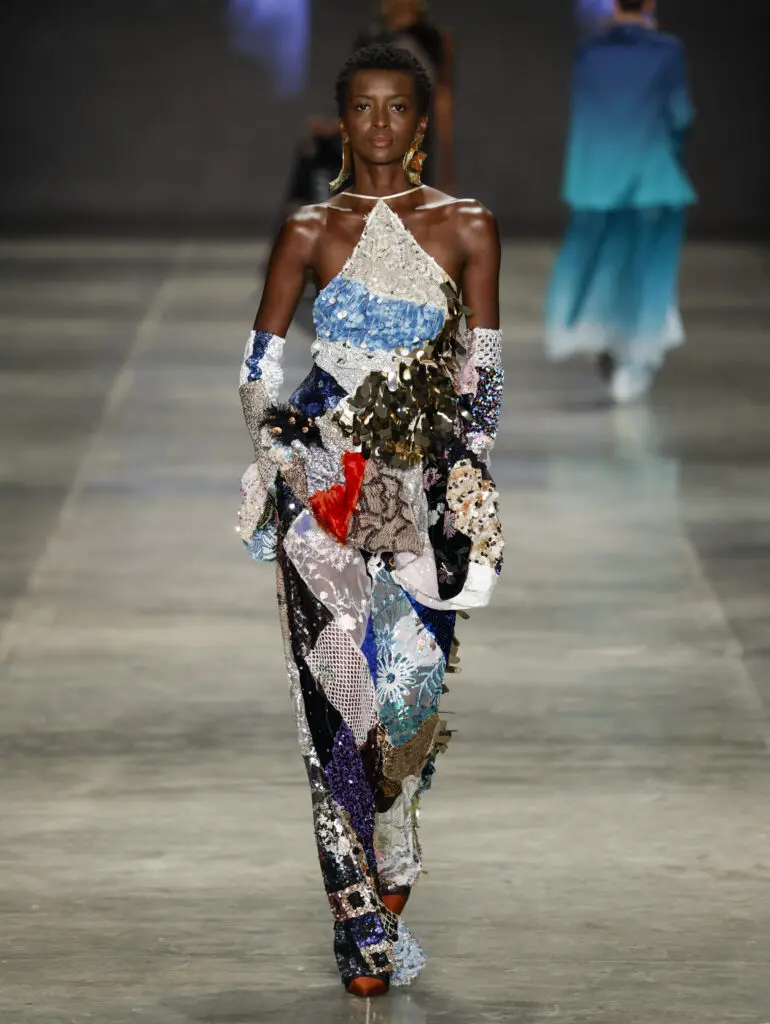
Another example came from Apartamento 03, which worked with materials recovered from its own archive, including lace and supplier samples. Fabric scraps, embroidery, beads, and macramé elements were incorporated into the designs, bringing together material memory, experimentation, and reuse. In this approach, traces of time are not necessarily erased; instead, they can become part of a garment’s visual language.
Techniques Tell Stories, Too
Behind every embroidered detail, woven structure, or piece of lace lies a body of knowledge involving materials, gestures, tools, repetition, and experience. Each technique carries its own particular ways of understanding and transforming matter.
Handmade craftsmanship also invites us to reconsider the relationship between time and value. In a context of accelerated production and the constant circulation of new trends, processes that demand dedication and precision offer a different perspective on creation. The time invested is not merely a stage of production; it also contributes to a garment’s identity and meaning.
This does not mean setting craftsmanship against innovation. The runway shows demonstrated precisely how traditional techniques can be reinterpreted, combined with new materials, and incorporated into new creative proposals.
A Thread Connecting Past and Present
The celebration of SPFW’s 30th anniversary reminds us that fashion history is shaped by more than trends, collections, and memorable images. It is also built through techniques, materials, and knowledge passed down across generations, evolving over time and finding new possibilities in the present.
By highlighting these creations and revisiting moments that have shaped its journey, the fashion week underscores the importance of keeping these forms of knowledge alive and recognizing those who pass them on. Behind every garment are women and men artisans who dedicate their time, skill, and experience to ensuring the continuity of these traditions. Recognizing their contribution also means preserving part of fashion’s cultural history and allowing this knowledge to continue inspiring future generations.


 Portuguese
 French
 English
 Italian