
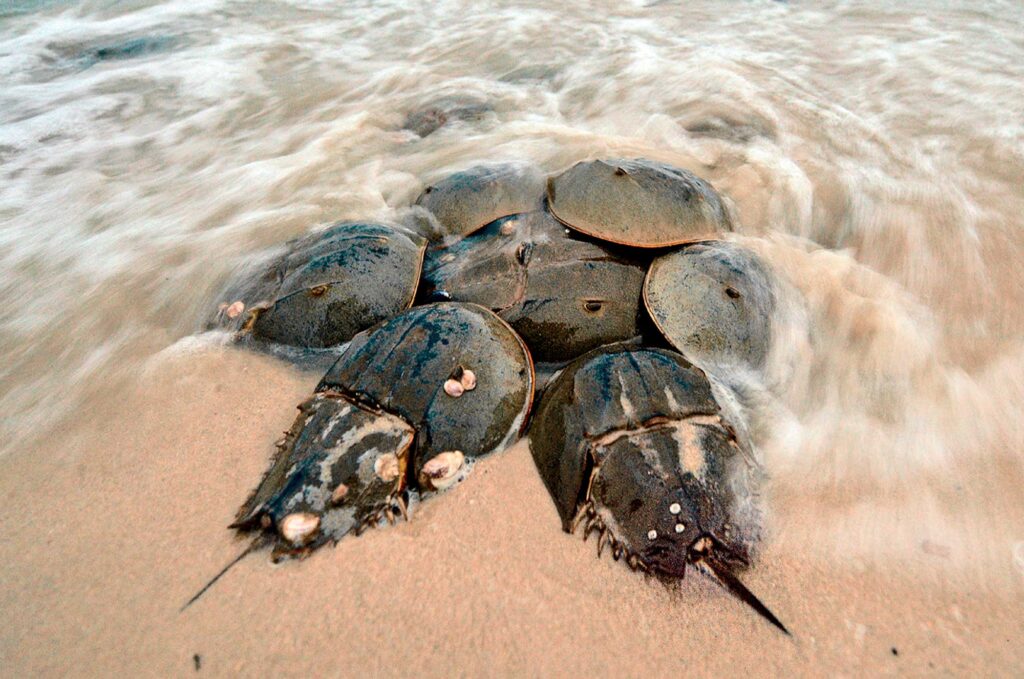
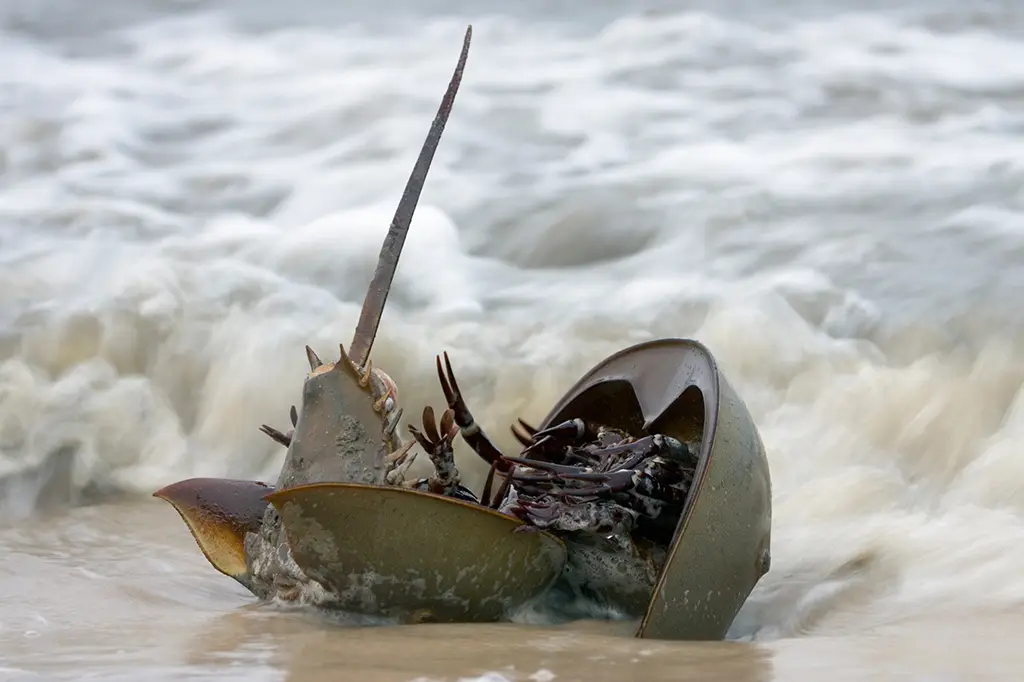
The horseshoe crab is a true living fossil: it has existed for over 450 million years, long before the dinosaurs. Despite its name, it is not a crustacean but a distant relative of spiders and scorpions. Its horseshoe-shaped body and long tail are its trademark features.
Every year, approximately half a million Atlantic horseshoe crabs are captured for the biomedical industry, according to the Atlantic States Marine Fisheries Commission. The reason is their blue blood, which contains a substance capable of detecting toxins with extremely high sensitivity. The bluish color of the blood comes from the presence of copper, which performs the same role as iron in human blood, responsible for its red hue. Because of this unique property, horseshoe crab blood is used to ensure the safety of vaccines and medications, helping save millions of lives every year.
The demand is so high that the blood of these animals is among the most expensive liquids in the world, costing up to $15,000 (about R$69,000) per liter.
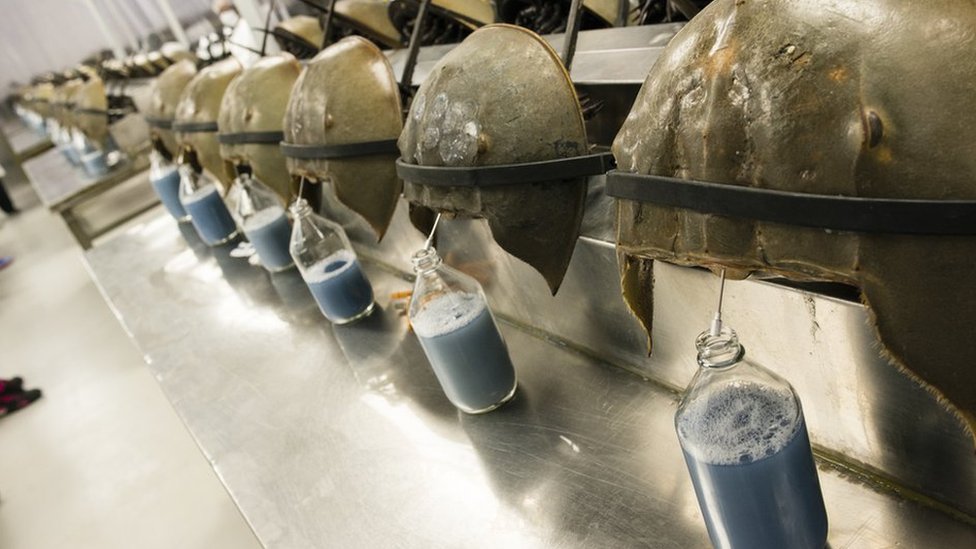
Although most of the animals are returned to the sea after collection, studies indicate that 10% to 30% do not survive, and even the females that do survive may have reduced reproductive capacity. This process, combined with habitat destruction, pollution, and use as fishing bait, places the species at risk.
Scientists warn that the demand for tests based on LAL (Limulus Amebocyte Lysate) and TAL (Tachypleus Amebocyte Lysate) is likely to increase as the global population grows and life expectancy rises. At the same time, there are debates advocating the use of synthetic versions as a more ethical solution. The pharmaceutical industry argues that these alternatives still need to prove effectiveness outside controlled laboratory environments, being capable of detecting toxins in real-world situations, not just in strains developed for testing.Limulus Amebocyte Lysate) e TAL (Tachypleus Amebocyte Lysate) tende a crescer conforme a população mundial aumenta e a expectativa de vida se prolonga. Ao mesmo tempo, existem debates em defesa do uso de versões sintéticas como uma solução mais ética. Já a indústria farmacêutica argumenta que essas alternativas ainda precisam demonstrar eficácia fora do ambiente controlado dos laboratórios, sendo capazes de detectar toxinas em situações reais, e não apenas em cepas desenvolvidas para testes.
Sources: BBC, Wikipedia, Super Interessante, Google Images, and Getty Images.